The Case for Community Action Agencies: Why Local Matters More Than Ever

The Case for Community Action Agencies: Why Local Matters More Than Ever

Across America, quiet heroes are at work every day — not in Washington, not in big boardrooms, but in neighborhoods, churches, and small community centers.

They are called Community Action Agencies (CAAs), and their mission is simple but powerful: to help people and communities rise out of poverty and thrive.

But what makes their work so special — and so essential — in today’s world?

1. Poverty Isn’t Just About Money — It’s About Opportunity

  • Studies show that where you live can affect your chances of success more than almost anything else — even your effort or education.
  • The U.S. has one of the lowest rates of economic mobility among developed countries.  That means it’s harder to “move up” in the U.S. if you start poor. (source: The Pew Charitable Trust)
  • CAAs focus on changing that by working at the local level — where the problems (and the solutions) really live.

“If you want to change the world, start with your zip code.” (Unknown)

2. National Vision, Local Action

Every CAA is different — because every community is different.

  • One may focus on helping seniors stay in their homes. Another might train people for clean energy jobs or connect families to childcare.
  • Together, the nation’s 1,000+ CAAs form a powerful network reaching 99% of U.S. counties.

Mecklenburg County’s Community Action Agency, Charlotte Area Fund, partners with:

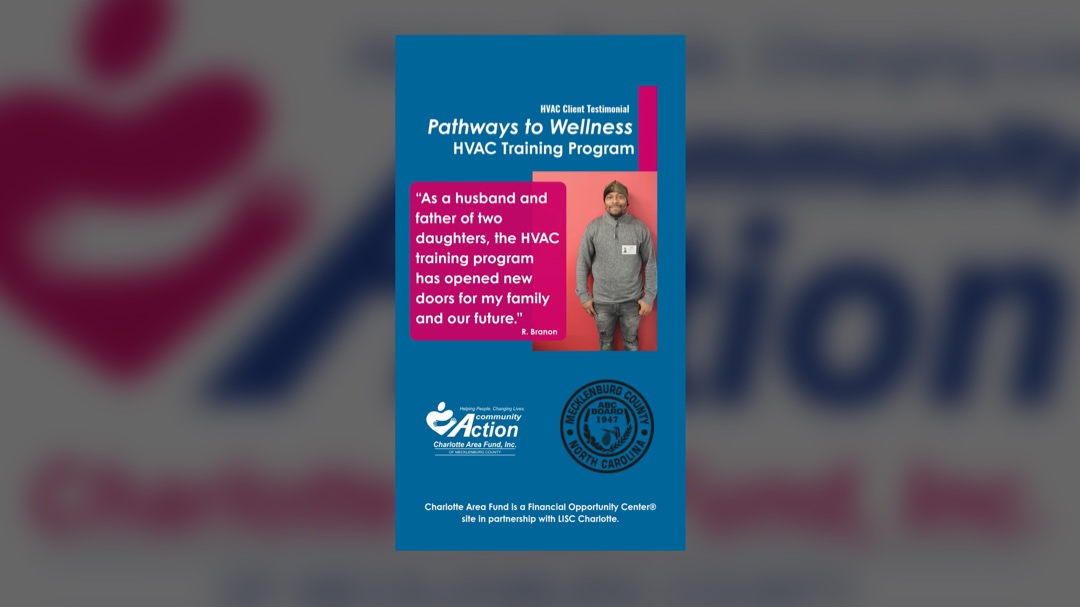
  • LISC Charlotte to operate the Financial Opportunity Center® program, where residents build credit, learn budgeting, and connect to living-wage jobs.
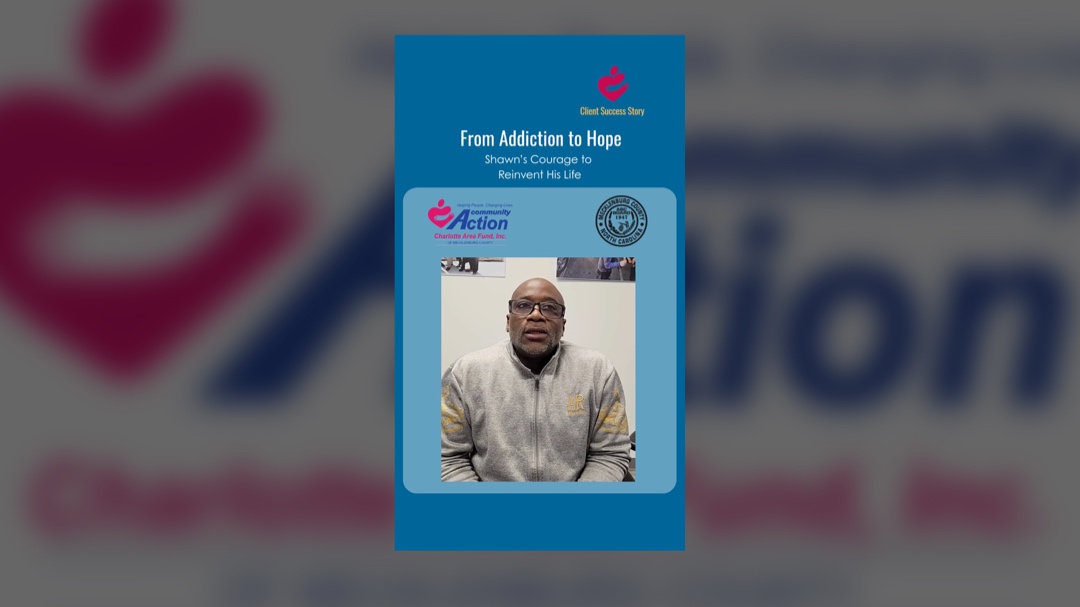
  • Mecklenburg County through the Opioid Settlement Program, helping individuals in recovery find stable employment and hope.
  • Chosen Healthcare, CPCC, and other training schools to offer healthcare certifications that open doors to high-demand careers.
  • Local faith leaders and nonprofits to provide career support and job training to neighbors who need a hand-up.

Together, these partnerships make the Charlotte Area Fund a local engine for national progress.

3. They Don’t Just Provide Services — They Build Systems

Most nonprofits tackle one issue at a time. Community Action Agencies connect the dots.

They help families with:

  • Job training
  • Affordable housing
  • Food and nutrition
  • Energy assistance
  • Education and childcare
  • Small business support

But they also tackle the root causes — like inequity, lack of access, and outdated systems — to make lasting change.

4. They Deliver Real Results

Research from the National Community Action Partnership shows that in a single year:

  • More than 10 million people receive support from CAAs.
  • 5.9 million households get energy assistance.
  • Thousands of people gain new jobs and higher incomes, including hundreds of individuals in Charlotte.

And these numbers don’t just represent “help.”

They represent momentum — people moving forward, families becoming stable, and communities becoming stronger.

5. They’re a Smart Investment

For every $1 invested through the Community Services Block Grant (CSBG) — the main funding source for CAAs — local communities see a return of more than $7 in social and economic impact.

That’s one of the highest returns of any federal program.

Think about it:

  • Families stay in homes instead of becoming unhoused.
  • Workers get trained for higher-paying jobs.
  • Seniors and children stay healthy and independent.

Those savings ripple through the economy — reducing healthcare costs, boosting productivity, and strengthening neighborhoods.

In Charlotte, that investment multiplies when combined with county and corporate partners like:

  • Truist, Wells Fargo, and Bank of America, who support financial literacy and volunteer initiatives.
  • The Park Church and C.W. Williams Health Center, who extend community outreach and health access.

6. They’re Not Charity. They’re Change.

Community Action isn’t a handout — it’s a hand-up.

It’s built on partnership, empowerment, and accountability.

CAAs help people set goals, build plans, and achieve independence — not just survive another month.

That’s the difference between a safety net and a springboard.

7. The Future Depends on What We Do Together

Currently, many Community Action Agencies like Charlotte Area Fund face funding uncertainty due to federal delays and budget debates.

Yet our work has never been more urgent.

If we want stronger schools, safer neighborhoods, and more stable families —

we must protect and invest in the infrastructure that makes it possible:

Community Action.

Because this isn’t just their story — it’s everyone’s.

When we invest in Community Action, we invest in each other.

When we advocate for programs like CSBG, we stand up for the families, seniors, veterans, and workers who make our cities and towns thrive.

When we come together, local action becomes national strength.

In Summary

Here’s why Community Action Agencies matter:

  • They fight poverty locally and effectively.
  • They connect short-term help to long-term solutions.
  • They multiply every dollar of investment many times over.
  • They empower people — not just serve them.
  • They fuel economic mobility.

A Call to Action

If you believe in the power of community:

  • Learn about your local Community Action Agency.
  • Share their success stories.
  • Advocate for programs like CSBG that keep their doors open. It’s easy – learn how here!
  • Remind your elected leaders that local action changes lives.

Because when communities act — people rise.

The Quiet Engine Behind America’s Fight Against Poverty Is Under Threat

There’s a quiet but powerful engine that’s been empowering millions of Americans to climb out of poverty, gain meaningful work, build stronger families, and strengthen the economy.

It’s called the Community Services Block Grant (CSBG), the primary federal funding stream for Charlotte Area Fund— and it’s currently on the chopping block.

In the ‘big beautiful bill’, the Community Services Block Grant (CSBG)—the core funding source for 1,000 Community Action Agencies (CAAs) operating in 95% of U.S. counties¹—would be eliminated. This would devastate the national network of programs that CAAs support, especially those serving low-income families and seniors.

Community Action Agencies are the connective tissue in a national network of vital services for low-income families and seniors, including Head Start, the Weatherization Assistance Program, and the Low Income Home Energy Assistance Program.

  • Community Action Agencies – Promote self-sufficiency by helping individuals and families become economically secure and invest in their future.
  • Head Start – Fosters healthy early childhood development and school readiness.
  • Weatherization Assistance Program – Helps families reduce energy costs through HVAC improvements and essential home repairs.
  • Low Income Home Energy Assistance Program (LIHEAP) – Assists seniors and vulnerable households with heating and utility expenses.

If the budget is indeed eliminated, programs like ours at Charlotte Area Fund (CAF) in Mecklenburg County and 32 other agencies across North Carolina would be crippled. The infrastructure supporting the working poor — the people who make this country function — would vanish.

And yet, most people are unaware this is happening.

What CSBG Actually Does

CSBG isn’t a handout. It’s a smart, flexible funding source that allows agencies like ours to design local solutions to local poverty — like high-demand career pathway training, education, food nutrition, childcare, financial education, emergency assistance, transportation, and housing support.

At Charlotte Area Fund, CSBG enabled us to:

● Direct $1.9 million CARES emergency assistance to families devastated by COVID

● Build MT25:40 Mobile Vehicle to provide the county’s unhoused with showers and washed clothing

● Launch CAF Financial Opportunity Center® in partnership with LISC Charlotte, helping families build income, reduce debt, and improve credit.

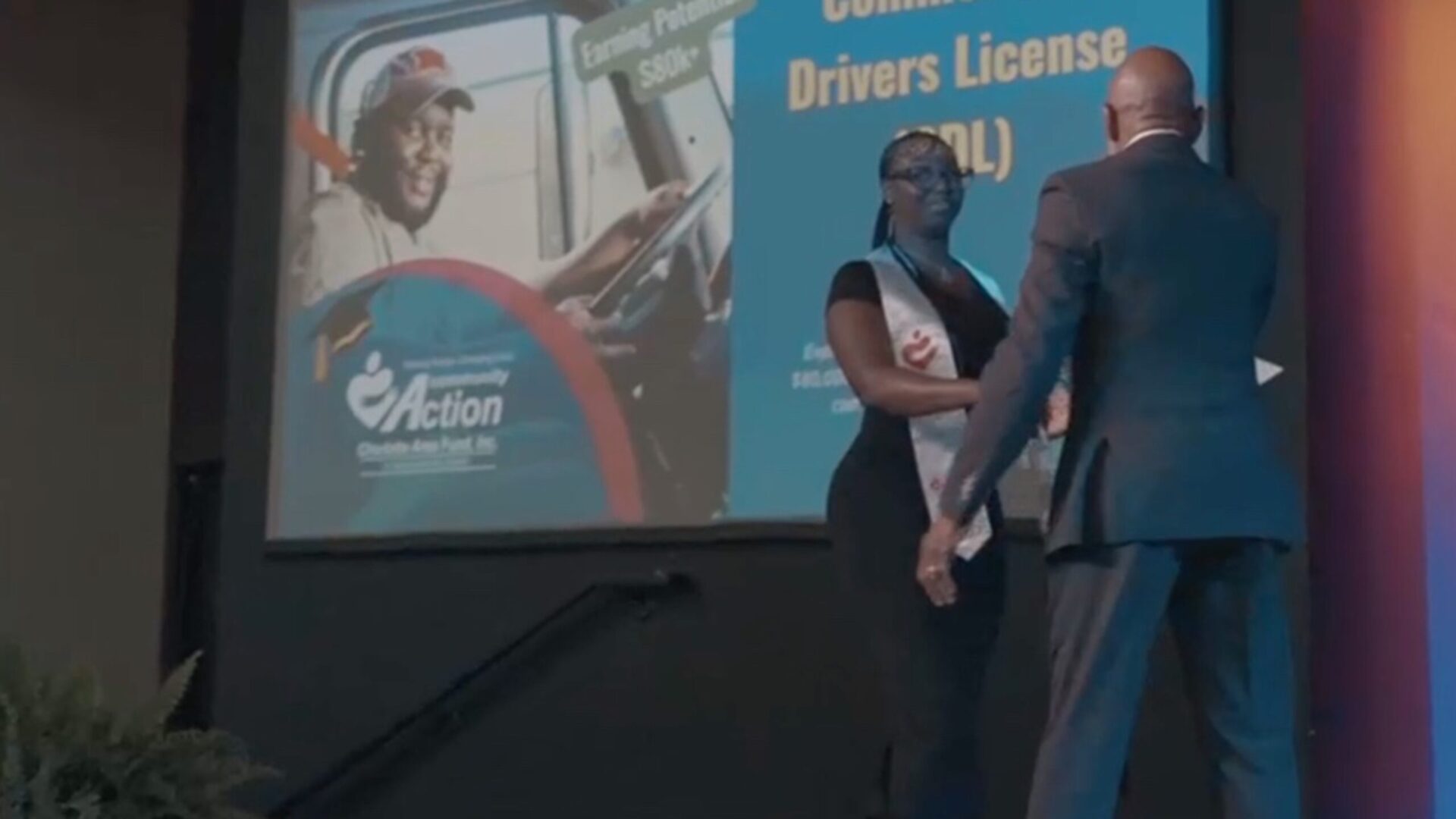
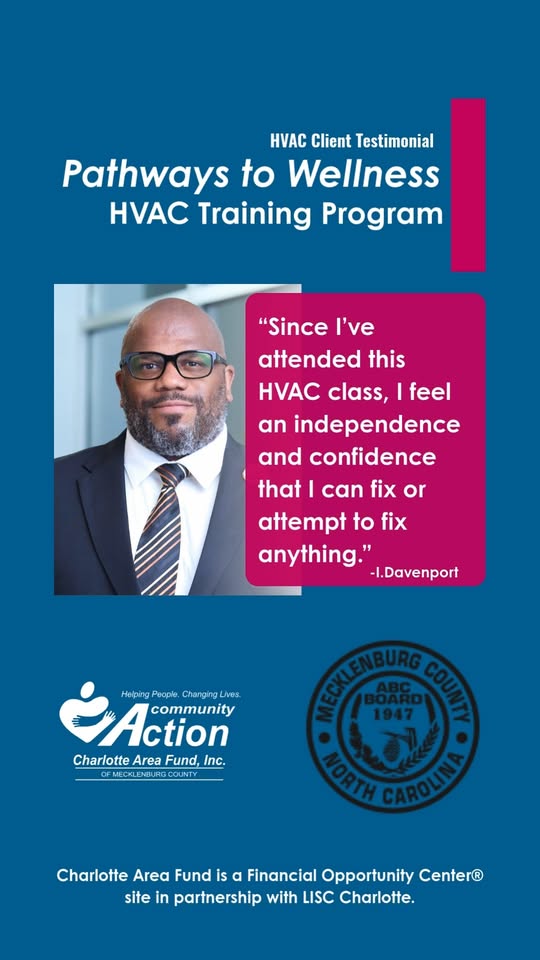
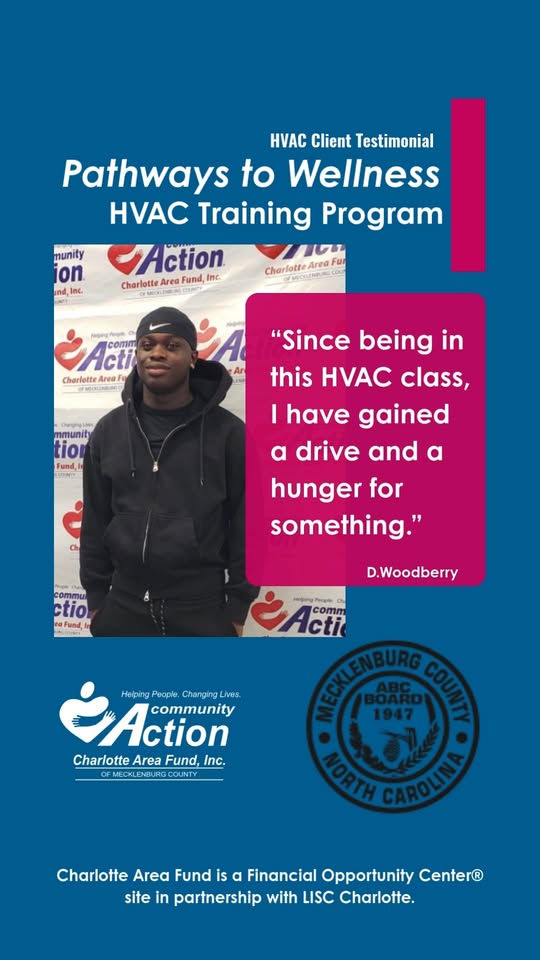
● Provide career pathway training in high-demand industries, helping participants gain living wage careers with real benefits.

● Deliver wraparound support that addresses barriers to success — including child care access, transportation, nutrition, and emergency financial assistance.

● Maximize every dollar received by effectively leveraging state, federal, and private resources to build sustained strategic partnerships with local nonprofits, businesses, and public agencies.

These efforts don’t just make people feel better — they sustain families and the economy!

In 2023 alone, CAF helped over 900 Mecklenburg County residents take critical steps toward economic stability. Over 70% of clients who completed workforce training found employment within 90 days.²

Why CSBG Matters Now More Than Ever

In a post-pandemic world marked by skyrocketing rents, rising childcare costs, and shrinking safety nets, CSBG is more essential than ever.

● Mecklenburg County ranks 38th out of 50 large cities in the U.S. for upward economic mobility for children born into poverty.³

● One in five children in Charlotte lives below the federal poverty line.⁴

● Nationwide, nearly 8 million people working full-time still fall below the poverty threshold.⁵

Eliminating CSBG now isn’t just ill-timed — it’s dangerous.

It would gut the very infrastructure needed to support working families, train future employees, and reduce intergenerational poverty. And once it’s gone, it won’t be easy to rebuild.

All of this underscores how fortunate we are that leaders from both parties recognize the vital role Community Action Agencies play and the impact of our programs.

We Need Your Voice

I share this from a place of conviction, not fear. We’ve seen what’s possible when we invest in people — and we know what we stand to lose if we don’t.

I’m asking you to help us advocate:

● Contact your representatives in Congress and urge them to protect Community Action Agencies (CSBG), Head Start, the Weatherization Assistance Program (WAP), and the Low Income Home Energy Assistance Program in the federal budget.

● Talk to local leaders, business owners, and community influencers about what’s at stake.

● Share stories, statistics, and personal experiences that show how Community Action Agencies make a difference.

● Use your platform — no matter how big or small — to shine a light on the funding that fuels real transformation.

Let’s make sure America’s most economically marginalized have a fair chance at life, liberty, and the pursuit of happiness.

– Nick Wharton President & CEO Charlotte Area Fund www.charlotteareafund.org

SOURCES

1. Community Action Partnership. “CSBG at a Glance.” https://communityactionpartnership.com

2. Charlotte Area Fund Program Reporting, 2023.

3. Opportunity Insights: Harvard University. “The Opportunity Atlas: Mecklenburg County Mobility.” https://www.opportunityatlas.org

4. U.S. Census Bureau, Small Area Income and Poverty Estimates (SAIPE), 2022. https://www.census.gov/data-tools/demo/saipe/#/?map_geoSelector=aa_c

5. U.S. Department of Labor, Bureau of Labor Statistics. “A Profile of the Working Poor, 2022.” https://www.bls.gov/opub/reports/working-poor/2022/home.htm